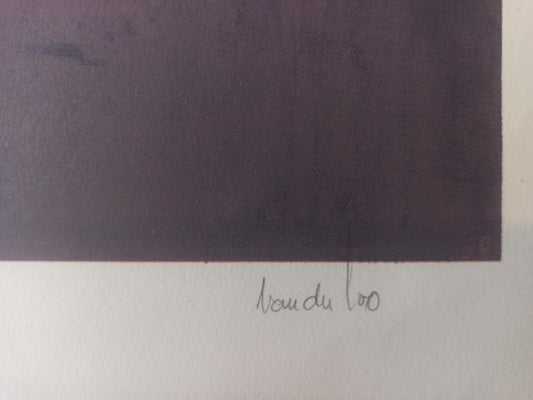
Bouchout, Belgium 1908 – 1978. Jan Van der Loo studied at the Royal Academy of Antwerp and the Hoger Institution. In 1933 he won the Godecharles Prize and in 1955 the Deauville International Prize. Until his death, he exhibited in several European countries and won seven international awards.
Jan Van der Loo's work has been considered as being related to Dalí's paintings, but paradoxically Van der Loo had never seen the Spaniard's paintings before the great retrospective at the Boymans Museum in Rotterdam in 1970.
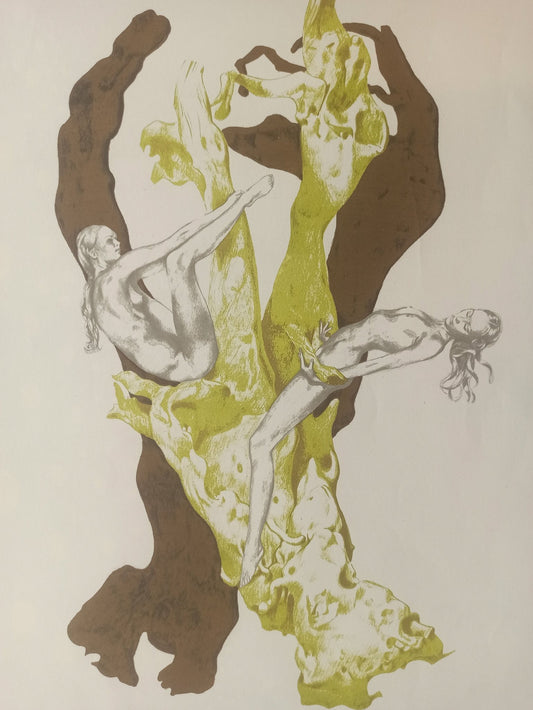
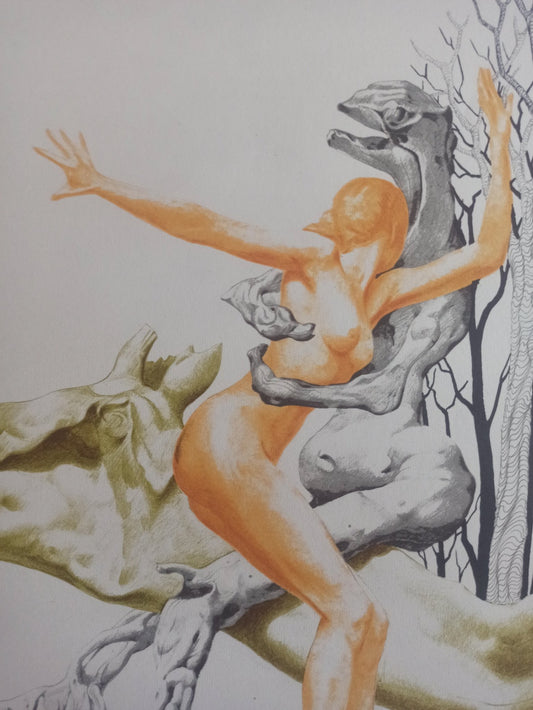
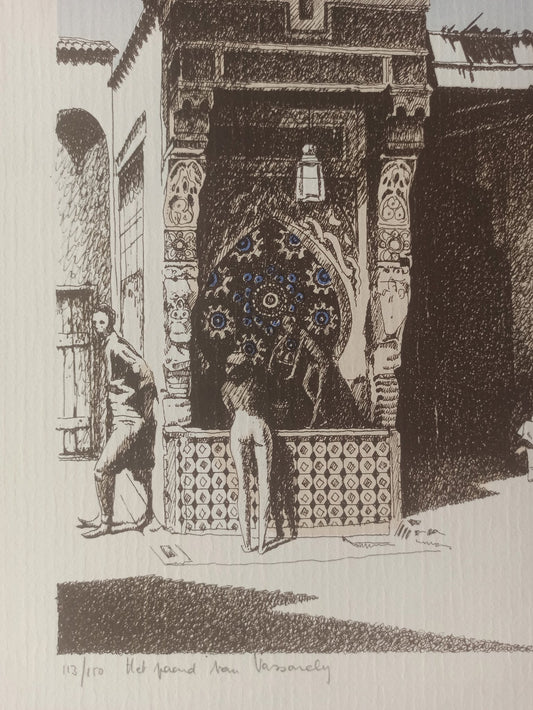
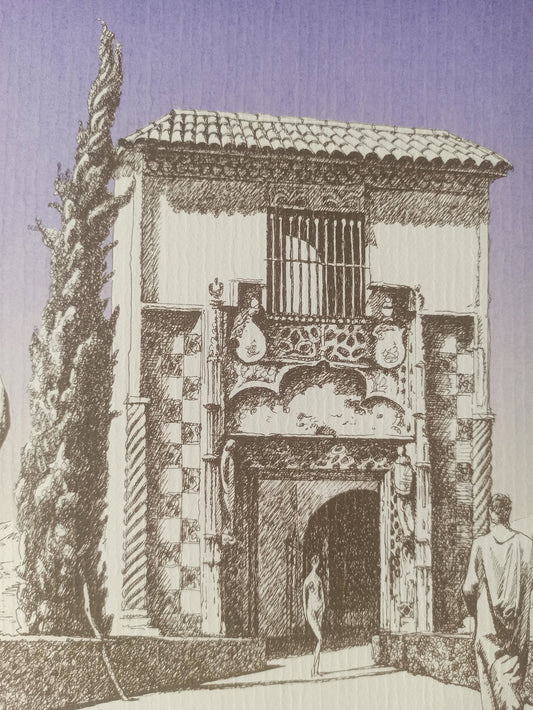
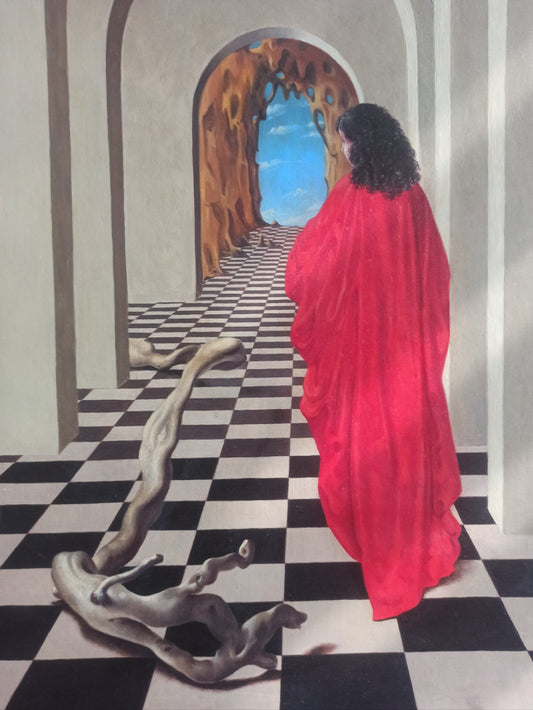
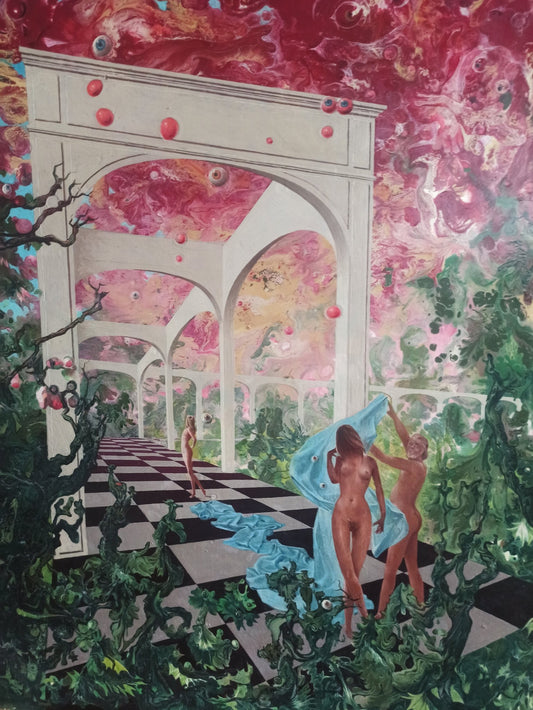
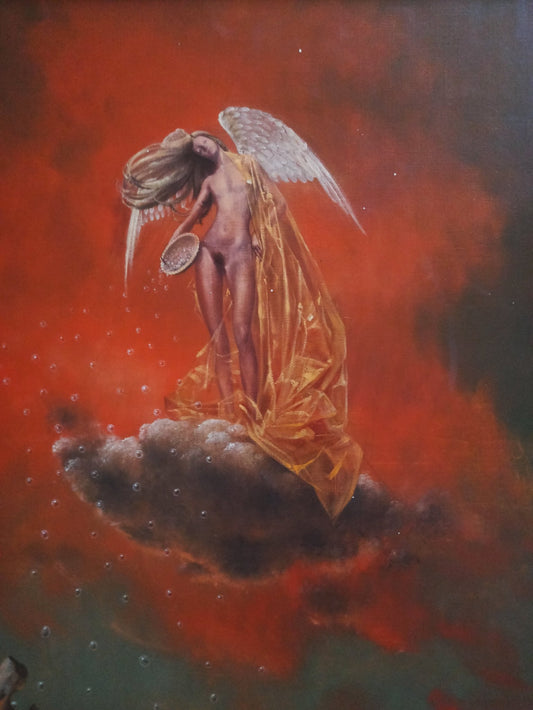
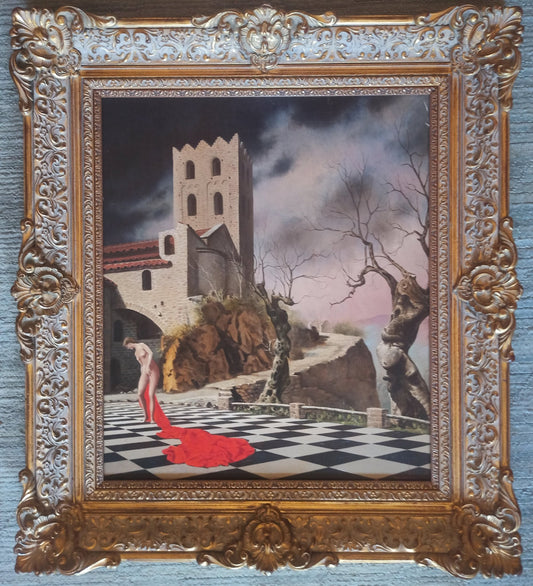
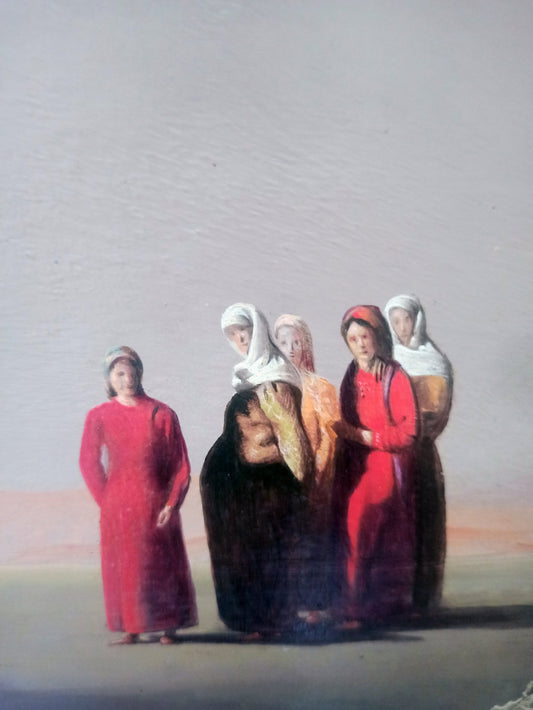
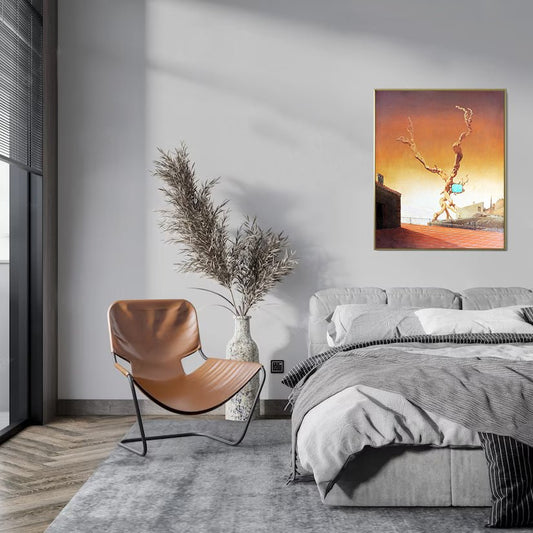
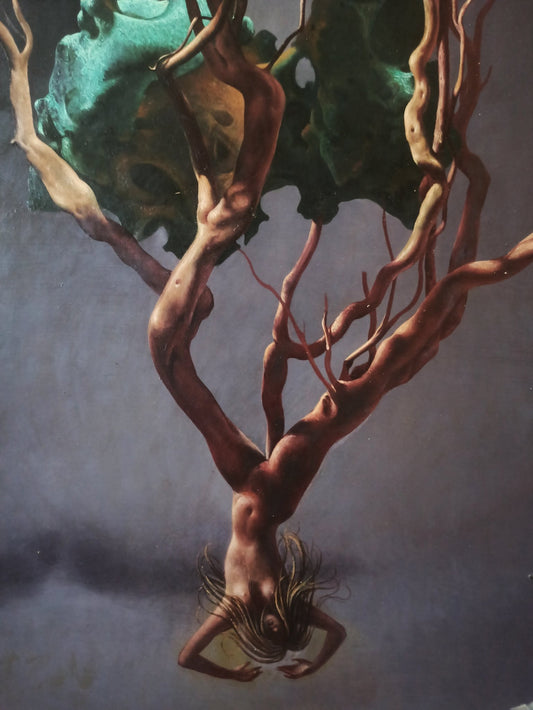
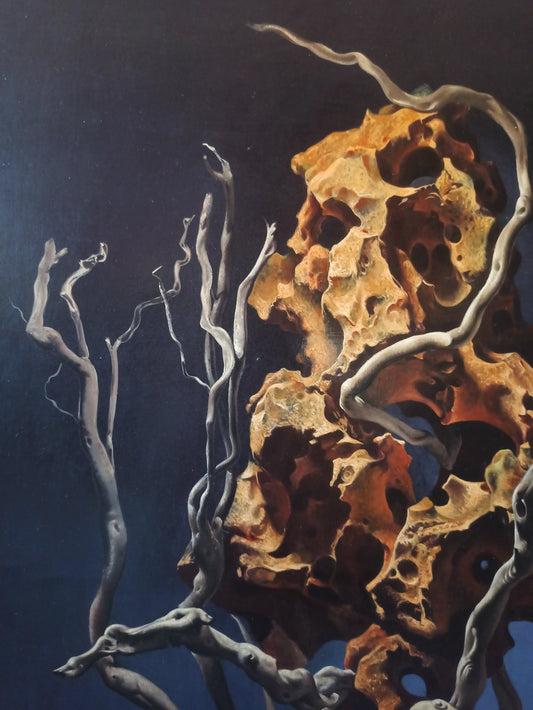
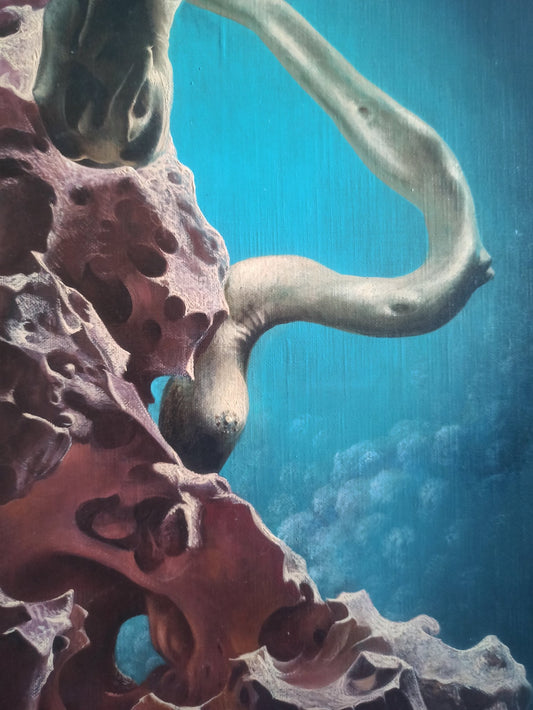
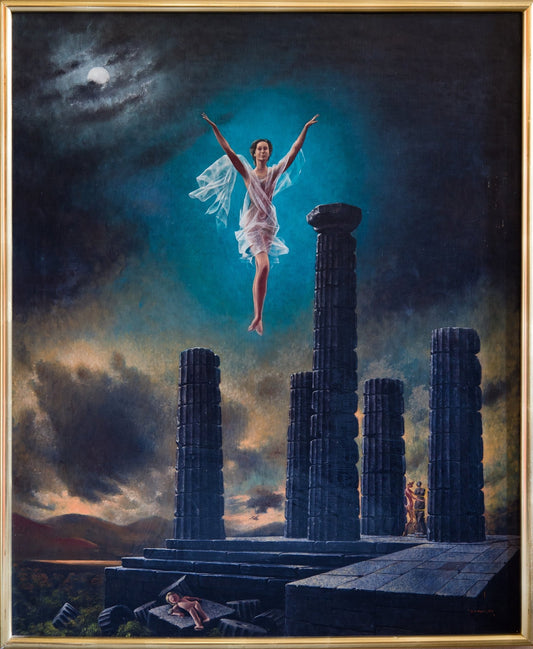
From 1953 onward, as a result of his experiences in much of Africa, Van der Loo's still life paintings and Impressionist portraits shifted toward a surrealism of great intellectual power. Illusions of power, palace ruins, mosques, Towers of Babel, arcades, and ancient porches reveal the artist's cultural background, inspired by the monuments and the vastness of Africa's flat, rocky, and desert landscapes. The long, elegant necks of the women Van der Loo paints in most of his works also originate from Zaire (formerly the Belgian Congo). Although white, they are always stylized and sensual. Exuberant, humanized, idealized, and anthropomorphic, the forms belonging to the animal and plant kingdoms metamorphose, undergoing strange transmutations, but above all, they are expressive, translating physical and moral feelings. Thus, dead vegetation and endless giant branches and roots often embrace each other like infinite arms, when they do not merge with or emanate directly from graceful and beautiful weightless, floating women surrendered to them. Indeed, woman, very present in Van der Loo's compositions, does not seem to tend so much toward eroticism—which in any case is delicate and without excess—but rather to be the continuation or extension of nature and to convey the symbiosis between the two. Woman as creator and symbol of life, woman as a natural element, woman, like nature, as a fascinating miracle and eternal question. And Van der Loo plastically materialized, as the art critic Carlos Areán affirmed, the subtle Orientalist thought of Lao Tzu, who wrote:
The spirit of the valley does not die
She is the mysterious female
The door to mystery
feminine is the root of the universe
Uninterruptedly
He continues his work tirelessly
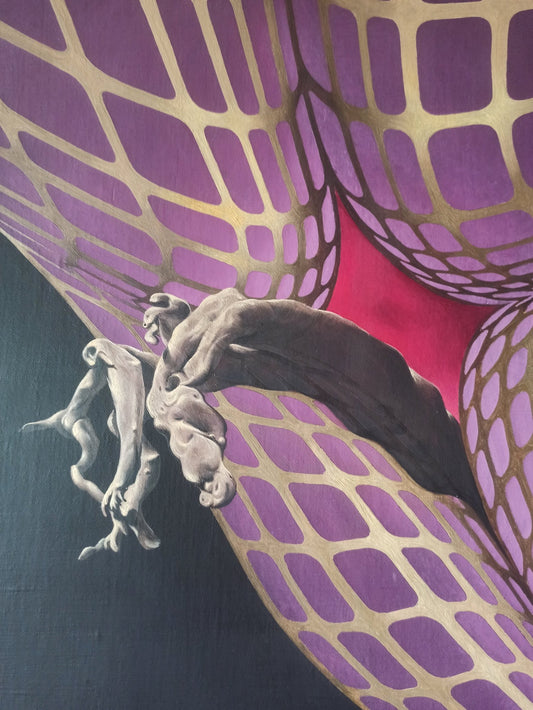
Also integral to these worlds are certain silent and discreet figures: an old man, a sage, a beggar, or a traveler with a hidden face, all contributing to the implicit solitude and the air of mystery in a magical atmosphere bathed in an often phantasmagorical light. The powerful imagination and voracious visual appetite of the Flemish artist extend from the real to the unreal, from the imagined to the unimaginable. The vision of the world he offers is unsettling. Surrealist, yes, but also hyperrealist, and imbued with a lyricism and humanism that never provoke or brutalize the viewer, these works, brimming with symbols and presences, display pre-Renaissance and Renaissance influences, sometimes blended with geometric structures, grids, borders, and chromatic gradations of OArt— whose greatest exponent and father is Victor Vasarely—which Van der Loo recreates with new and personal characteristics.
But all this vast cultural background and intellectual aspirations would amount to nothing without a technique to match, a meticulous drawing constructed slowly and perseveringly, with an elegant, smooth, fluid, and never heavy-handed line. As he himself said: “I detest a poorly executed and sloppy drawing. The subject matter may be disconcerting or even shocking, but it must be visually valid. Above all, I seek beauty, that which can produce a lasting emotion.”
AWARDS
1930. Engelen Prize
1932. Van Lerius Prize
1933. First Godecharles Prize
1953. Gold medal. Salon des Artistes Français. Paris
1st “Grand Prix International de Deauville” Award
1958. I “Grand Prix International de Cannes” Award
1965. I Prize “Grand Prix International Surréaliste de La Côte d'Azur”
WORKS IN MUSEUMS
Museum of Fine Arts. Antwerp
Belgian Ministry of Education and Arts
French Ministry of Education
Barcelona Museum of Modern Art
Bergen Museum. Norway
SOLO EXHIBITIONS
1935. Brussels
1936. Luxembourg
1941. Antwerp
1942. Brussels
1943. Antwerp
1948. Antwerp
1949. Kortrijk
1950. Kortrijk
1951. Kortrijk
St. Nicholas
1952. Antwerp
1954. Antwerp
Kinshasa
Paris
1957. Brussels
Hamburg
1958. Antwerp
Mechelen
Bremen
1960. Mechelen
1964. Mechelen
Nantes
1968. Ghent
1969. Antwerp
Kortrijk
Lokeren
Witches
Hereditary
1972. Luxembourg
Hague
Barcelona
1973 Bergen
Stavanger
1974 Barcelona
Ghent
1975 Amsterdam
Rotterdam
Hague
Oslo
GROUP EXHIBITIONS
Quadrennial in Liège. Brussels and Antwerp
Salon du Printemps. Brussels
Strasbourg
Salon d'Art Jeune. Brussels
Winter Salon. Paris
Salon des Artistes Français. Paris
Salon des Indépendants. Paris