Collection: Manuel Carmona ┃ Surrealist Work
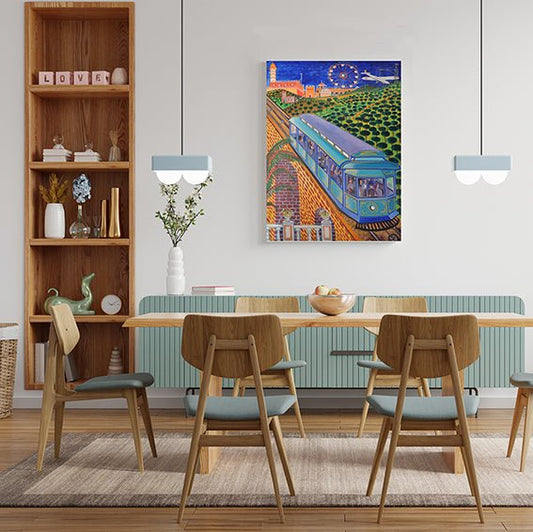
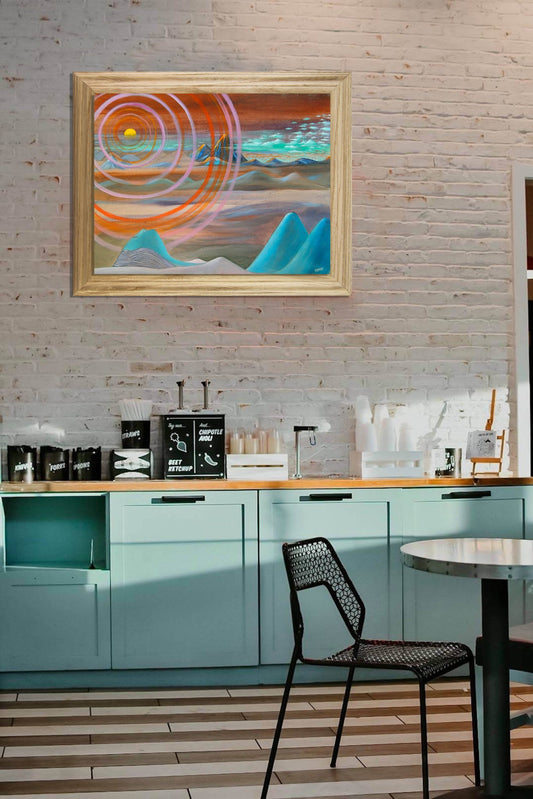
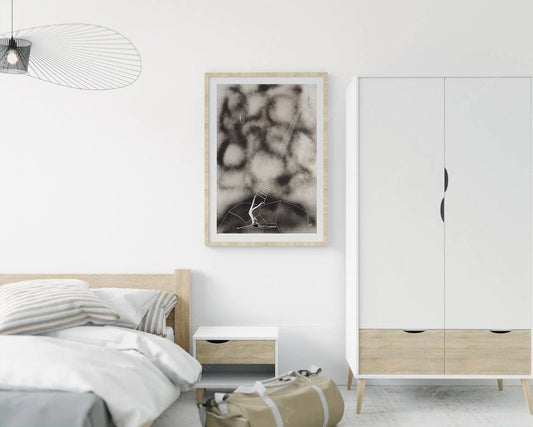
The painter Manuel Carmona developed a unique body of work situated between surrealism, naive art, and magical realism, creating dreamlike landscapes in which the everyday is transformed into poetic scenes loaded with symbolism and color. His visual language is characterized by the creation of evocative atmospheres, imaginary compositions, and a pictorial narrative that invites contemplation and emotional journeys. Part of his artistic career developed in Chile, where his work found a particularly fertile environment and was widely recognized. Today, his paintings and lithographs are part of private collections, consolidating themselves as highly valuable pieces within contemporary art of a figurative and symbolic nature.
Discover and acquire an original work by Manuel Carmona and add a unique piece of strong visual and poetic personality to your collection.


Biography
Pablo Neruda:
This Manuel Carmona is a devil. He creates nothing from nothing and transfigures this emptiness with papers, scissors, fish, birds, truths, and static, joyful dreams. I always celebrated his original joy, his lavish irreverence that delights in everyone's pleasure. That is his power. This Carmona doesn't abstain from the pleasure of beauty: he takes advantage of it while it's flying. And that's how he can give us a butterfly every day.
Nothing foreshadowed that a humble, simple, pacifist, and somewhat naive person, much like his painting style, would live through such momentous events of the 20th century. At a very young age, Manuel Carmona (Barcelona 1916 – Zaragoza 2001) came into contact with the Generation of '27, a group of artists such as Rafael Alberti, Federico García Lorca—with whom he maintained a relationship until Lorca's execution—Juan Ramón Jiménez, José Bergamín, Luis Cernuda, and Vicente Aleixandre. They were joined by Salvador Dalí—whose famous "Invisible Man" Manuel Carmona witnessed being created by—Gala, and filmmakers like Buster Keaton, who would forever influence the artist's sensibility. Like so many others, he experienced the tragedy of the Spanish Civil War, which he fought until the very end, because there was no other option, serving in the Republican Armored Corps. This earned him four years of imprisonment in prisoner-of-war camps and another six years of a less restrictive prison sentence.
In 1949, through the intervention of his brother Darío, a journalist and Pablo Neruda's secretary, Manuel Carmona managed to flee to Chile on a ship chartered by Neruda himself. Welcomed with open arms, like so many others fleeing Franco's regime, Carmona declared: "I had encountered a new world, a people whose philosophy and sense of hospitality is more than a patriotic courtesy: a conviction that fraternity is a moral obligation." With his proverbial humility, Manuel Carmona began to perform numerous jobs related to scientific and cultural organizations thanks to his connections with Rafael Gumuncio, Undersecretary of Finance; José Ramón Gutiérrez Allende, Minister of Foreign Affairs; and Salvador Allende, who was very close to Carmona's brother, Darío, whom his daughters called "uncle," and who was even applauded in Santiago's Plaza Bulnes by the future President. Manuel Carmona first exhibited in Santiago, Chile, in 1953 under the patronage of the French Cultural Institute and dedicated himself increasingly to painting, creating works that were both naive and slightly surreal, characterized by dreamlike worlds with highly stylized figures inhabiting poetic landscapes. From then on, he held numerous exhibitions in several South and Central American countries, meeting other artists and poets such as Mario Benedetti, as well as singular figures like Rigoberto López, the future assassin of Nicaraguan dictator Anastasio Somoza. Manuel Carmona organized the First Visual Arts Fair in Santiago, Chile. Manuel Carmona and Pablo Neruda.
In the 1970s, Manuel Carmona returned to Spain and dedicated himself exclusively to painting, exhibiting throughout the country. In 1998, the Generation of '27 Cultural Center published his memoirs, "Heir to Surrealism: A Testimony," which Carmona hesitated to write, considering it an act of vanity. In 2001, the year of his death, a second edition appeared, titled "Everything Lived Through," containing many fascinating excerpts, such as his encounter with Queen Victoria Eugenie of Battenberg, which had been omitted by an artist who always preferred to remain in the shadows.
WORKS IN MUSEUMS
Barcelona Museum of Modern Art
Museum of Fine Arts of Santiago, Chile
Museum of Contemporary Art of Managua, Nicaragua
Max Fourny Museum in Paris, France
Footwear Museum Foundation, Elda-Alicante
Museum of Contemporary Primitive Art, Jaén
Ivam Centre Julio González, Valencia
Museum of the Angels. Turégano, Segovia
SOLO EXHIBITIONS
1953. Santiago, Chile
1959. Montevideo
1973. Gaudí Room - Gaudifond Arte, Barcelona
Cap Gross Hall, Barcelona
Monzón City Council
1974. Edaf, Madrid
1975. S'Art Gallery, Huesca
1977. Galerie d'Art Helof. Paris, France
Mas Sardá Bank Gallery, Palma de Mallorca
1980. Goya Art Gallery, Zaragoza
1983. Tobella Archive Room, Terrassa
1984. House of Culture, Denia
" GROUP EXHIBITIONS
1957. National Tourism Board, San Salvador
1958. Institute of Marine Biology. Valparaíso
1960. First International Fair of Visual Arts, Santiago, Chile
1965. Houston, Texas
1974. “3 Art Walls of the Schools” UNESCO, Barcelona
“Exhibition 74” Gaudí Room - Gaudifond Arte, Barcelona
1975. Gaudí Room - Gaudifond Arte, Barcelona
“The cat in naïve art” Modena Room, Madrid
“Contemporary Spanish Naïve Art” National Board of Museums, Madrid
1976. International Biennial “Merignac” Bordeaux
II Biennial of Painting
Berdusán Gallery, Zaragoza
1978. “Exhibition of contemporary Catalan painting” Padrós Gallery, SA Barcelona
1979. S'Art Gallery, Huesca
1981. “Artistes Plastics de Catalunya” Palau de la Santa Creu. La Pedrera Gallery, Barcelona
Mobar Art Room, Terrassa
1982. “Aspects of Figurative Painting” Gaudí Hall - Gaudifond Arte, Barcelona
Mediterranean Art Gallery, Alicante
Savings Bank of Alicante and Murcia (Elche, Alcoy, Crevillente, Villena, Bañeres and Calpe)
First Naïf Art Salon, Roglán Gallery, Barcelona
1984. Richelieu Gallery, Madrid
1985. Savings Bank of San Fernando, Seville
1986. Montignac, France
1987. Seville
1988. Malaga
1989. Madrid
1990. Valencia
1991. Huesca
1992. Calpe, Alicante
1993. The Gallery 12 bis, Villafranca
Seville
1994. Zaragoza
1997. Calpe, Alicante
1998. Granada
1999. Barcelona
Saragossa
Calpe, Alicante
2000. Denia, Alicante
The excitement for going to the beach stemmed from the fact that Gala bathed naked. The beach was in a small cove, inaccessible from Torremolinos. I stood there, mesmerized, behind Dalí, at the kiosk, while the painter worked his magic. He was painting a large canvas in which, through a harmonious landscape of distant horizons and clouds, he created a scene.
The voluminous shapes began to reveal a human being who filled the entire space, the air, the clouds—I think they were part of his head—and among the clouds, I believe, an eye appeared. The mystery was becoming clearer as he progressed with his painting. The entire landscape, in its transparency, revealed a man, "The Invisible Man ," that's the name of the painting, which I watched being created, remaining silent. There I did my rehearsals, my first tentative attempts to say something with my brushes. I remember I painted an octopus with many arms and human hands. Dalí praised it and traded it for one of his own drawings, with delicate lines and, in full color, a green sailor's cap. It remained there, like so many things, tucked away in a textbook, lost amidst wars and postwar periods.
-
Manuel Carmona - The Cathedral of Barcelona
Regular price 65,00€Regular price -
Manuel Carmona - Cotton Mills
Regular price 70,00€Regular price0,00€Sale price 70,00€ -
Manuel Carmona - The Valley
Regular price 1.000,00€Regular price -
Manuel Carmona - Tibidabo
Regular price 1.000,00€Regular price -
Manuel Carmona - Ronda. The Tagus River
Regular price 1.100,00€Regular price -
Manuel Carmona - Icy
Regular price 1.100,00€Regular price -
Manuel Carmona - Atacama
Regular price 1.100,00€Regular price -
Manuel Carmona - Sonsonate
Regular price 1.200,00€Regular price -
Manuel Carmona - The Antilles
Regular price 1.200,00€Regular price -
Manuel Carmona - Stairway to Space
Regular price 1.200,00€Regular price -
Manuel Carmona - The Volcano
Regular price 1.300,00€Regular price -
Manuel Carmona - La Moneda Palace. Santiago, Chile
Regular price 1.450,00€Regular price